Buy foofl.com ?
We are moving the project
foofl.com .
Are you interested in purchasing the domain
foofl.com ?
domain@kv-gmbh.de · 0541-91531010
Buy foofl.com ?
What are Viking names?
Viking names were typically derived from Old Norse language and often reflected the individual's characteristics, family lineage, or the gods they worshipped. Common Viking names included Thor, Ragnar, Bjorn, Freydis, and Astrid. Surnames were often formed by adding "son" or "dottir" to the father's name, such as Eriksson or Thorsdottir, indicating "son of Erik" or "daughter of Thor." Viking names were also often descriptive, such as "Ironside" or "the Red," reflecting physical attributes or personality traits. **
What is Viking leather?
Viking leather refers to the type of leather used by the Vikings for various purposes, such as clothing, armor, and accessories. It was typically made from the hides of animals like cows, sheep, and goats, which were tanned using natural materials like tree bark. Viking leather was known for its durability and strength, making it ideal for the harsh conditions the Vikings faced during their expeditions and battles. Today, Viking leather is often recreated using traditional tanning methods to maintain its authenticity and historical significance. **

Similar search terms for Viking
Top-Angebote
Products related to Viking:
-
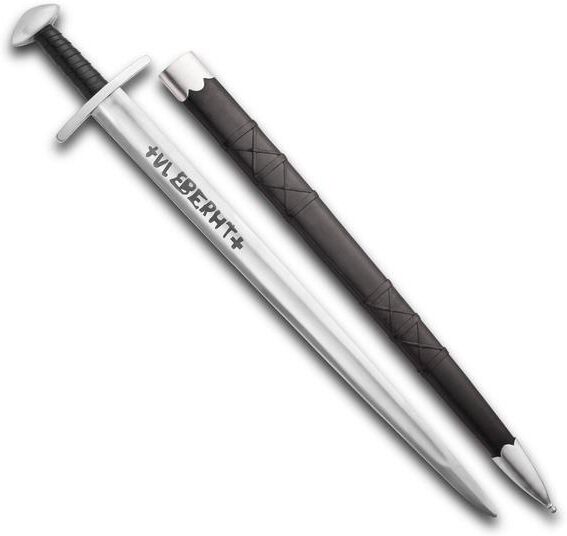
Windlass Viking UlfberhtKopierat från ett svärd som visas i Ian Pierces bok "Swords of the Viking Age" En gammal legend säger att en nordisk smed vid namn Ulfberht utvecklade det första bladet i helt stål. Denna avgörande utveckling uppnådde nästan mytisk status bland krigare, vilket gjorde detta till ett av de viktigaste svärden. Flera av dessa blad från lite olika tidsperioder finns, några graverade i tacksamhet och vördnad med Ulfberhts helgade namn. Före Ulfberhts svärd var alla europeiska svärd av den mönstersvetsade sorten. Mjuka järnstänger svetsades samman med stålremsor, smiddes till en bladform, sedan svetsades en stålkant på svärdet. Men Ulfberhts svärd var ett kvantsprång i både teknik och design. Tillverkad inte av remsor, men bra kolstålblad med tillräckligt kolinnehåll för att producera utmärkta svärd. Utformningen av svärdet var också en förbättring. Bladet avsmalnande skarpare till punkten än tidigare blad. Detta satte svärdets balans närmare handen, vilket gjorde ett svärd som var snabbare på både slag och återhämtning än tidigare blad. Etsningarna på båda sidor av vårt blad är kopierade exakt så att vår reproduktion är identisk, vårtor och allt. Tillverkad av högkolstål (faktiskt bättre än originalet) och är vackert balanserad. Greppet är av trä omslaget med läder. Det kraftiga tvärskyddet är av stål och klossen är av paranötsformen som var ganska populär på den tiden, både hos vikingar och resten av Europa. Ett vackert och viktigt svärd. Viking Ulfberht kommer med skida3495,00 SEK*Shipping: 0,00 SEKSecure redirect to the provider
-
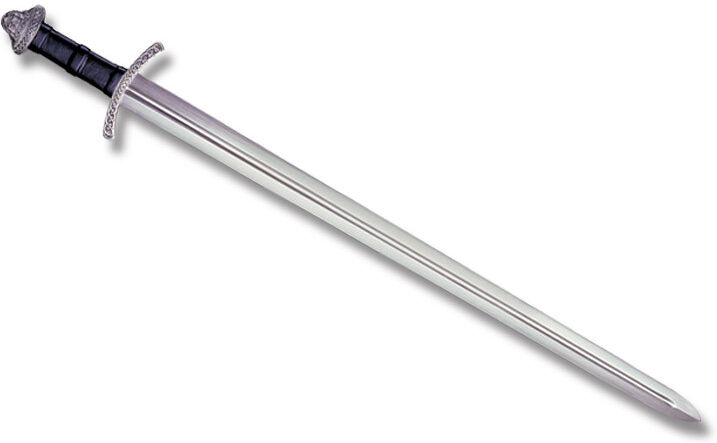
Cold Steel Viking SwordThe typical Viking sword of the 9th and 10th centuries featured a long wide blade with a broad central fuller and two keen edges. The preferred stroke was a hard slash or chopping blow, so the point was fairly rounded but was just acute enough to be useful for thrusting. A simple guard with forward curving quillions was often utilized and combined with an equally utilitarian wooden handle that was covered with leather, bone, or even cast in brass. What really made the Viking Sword so distinctively recognizable from its contemporaries was its heavy 5 lobed pommel used to balance the long blade. Our sword has features in common with its historical counterpart. It has a double edged blade, hand forged out of high carbon steel and then polished to a brilliant lustre. The wooden handle is covered in leather and is supported by a simple, elegant guard at one end and an equally handsome 5 lobed pommel at the other. Both guard and pommel feature traditional Celtic knot embellishments. To house the keen double edge blade each of our swords is supplied with a wood scabbard covered in black leather and reinforced with a highly polished steel chape and throat. Weight 1.05kg Blade Thickness 6.0mm Blade Length 76.8cm Handle 16.8cm Handle Details Leather Wrapped Steel 1055 Carbon Overall 93.7cm Scabbard Leather/Wood w/Steel Fittings5395,00 SEK*Shipping: 0,00 SEKSecure redirect to the provider


-
What is Viking blood?
Viking blood refers to the genetic heritage of the Norse people who lived in Scandinavia during the Viking Age. It is often used to describe the ancestry and lineage of individuals who can trace their roots back to the Norse populations of that time. The term "Viking blood" is also sometimes used more broadly to symbolize the characteristics and traits associated with the Norse people, such as bravery, exploration, and resilience. However, it's important to note that the concept of "Viking blood" is largely a cultural and historical construct, and genetic ancestry is much more complex and diverse than any single label can capture. **
-
What are Viking tattoos?
Viking tattoos are designs inspired by the art and symbols of the ancient Norse people, who were known for their seafaring and warrior culture. These tattoos often feature images such as Norse gods and goddesses, runes, ships, and animals like wolves and ravens. Viking tattoos are popular among people who are drawn to the history and mythology of the Viking age, and they are often chosen for their bold and intricate designs. These tattoos can hold personal significance for individuals who feel a connection to Viking heritage or who admire the values of strength, bravery, and adventure associated with the Norse culture. **
-
What are Viking runes?
Viking runes are an ancient writing system used by the Norse people, particularly during the Viking Age. The runic alphabet consists of 24 characters, each representing a different sound. Runes were used for writing inscriptions on stones, wood, and metal, as well as for magical and divinatory purposes. They were an important part of Norse culture and were used to convey messages, record important events, and communicate with the gods. Today, runes are often associated with Norse mythology and are sometimes used in modern practices such as divination and magic. **
-
Is Wickie, the Viking from Vicky the Viking, a boy or a girl?
Wickie, the Viking from Vicky the Viking, is a boy. He is a clever and resourceful young Viking who often uses his intelligence to solve problems and help his fellow Vikings. Wickie's character is known for his bravery and quick thinking, making him a beloved protagonist in the series. **


Is Wickie, the Viking from "Vicky the Viking," a boy or a girl?
Wickie, the Viking from "Vicky the Viking," is a boy. He is a clever and resourceful young Viking who uses his intelligence to solve problems and help his fellow Vikings. Wickie's adventures and bravery are a central focus of the show, showcasing his character as a young male Viking. **
In which country is the Viking village Flake located in Vicky the Viking?
The Viking village Flake is located in the fictional village of Flake in the animated series "Vicky the Viking." The series is based on the original German children's book "Vicke Viking" by Runer Jonsson. While the specific country is not explicitly mentioned in the series, the original book is set in the fictional village of Flake in the Viking age, which is believed to be located in Scandinavia. Therefore, it can be assumed that the Viking village Flake is located in a Scandinavian country such as Denmark, Norway, or Sweden. **
Top-Angebote
Products related to Viking:
-
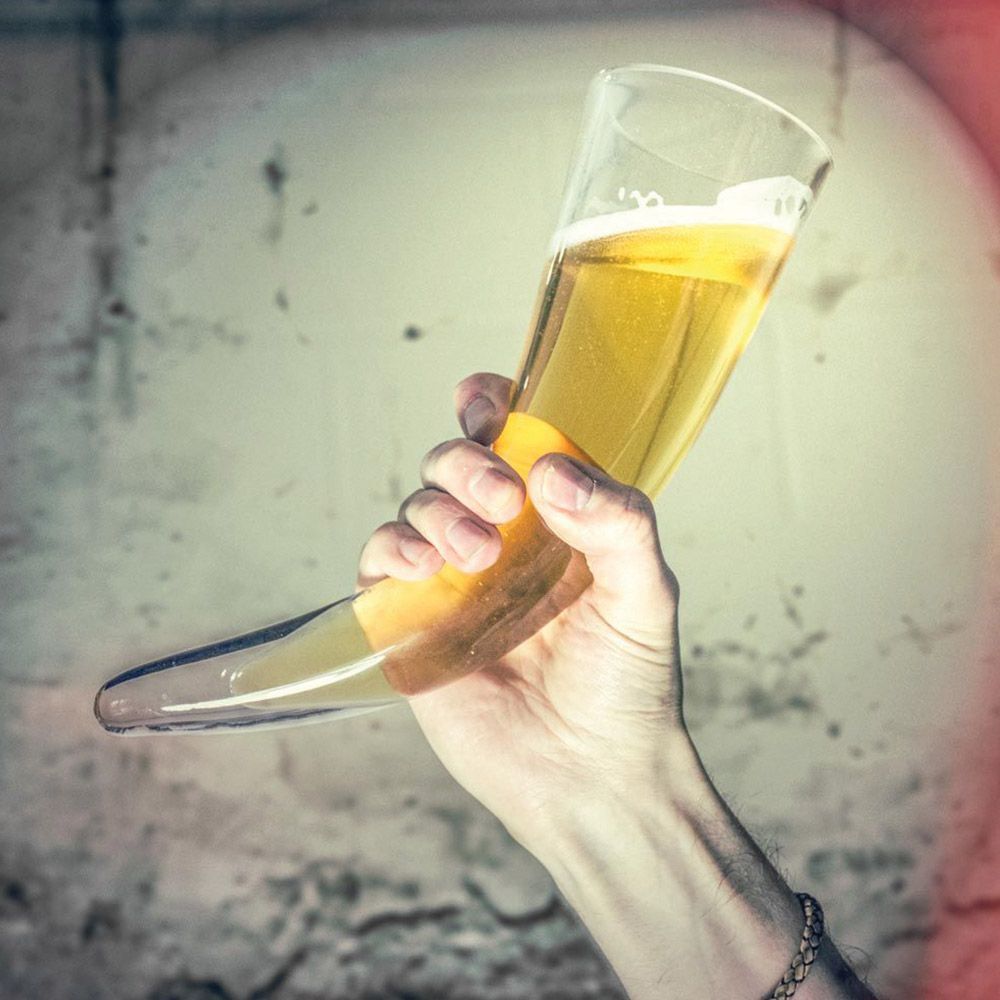
Viking Horn GlassSläpp loss din inre Viking och häll ölen i detta nordiska dryckeshorn. Nu kan du dricka öl eller mjöd som en Viking med detta ölhorn. En modernare version av det traditionella nordiska dryckeshornet. Kommer med ett trästativ för att undvika spill. En liten montering med de tre träbitarna krävs, men det är ju inga problem för en riktig Viking. Behövs ingen instruktionsbok, så enkelt är det! Nästan svårare att välja ölsorten. Glas Hornet rymmer ca 350 ml dryck Inkl. Träställ (4st skruv inkl.) Perfekt present till en riktig Viking!249,00 SEK*Shipping: 69,00 SEKSecure redirect to the provider
-
Windlass Viking UlfberhtKopierat från ett svärd som visas i Ian Pierces bok "Swords of the Viking Age" En gammal legend säger att en nordisk smed vid namn Ulfberht utvecklade det första bladet i helt stål. Denna avgörande utveckling uppnådde nästan mytisk status bland krigare, vilket gjorde detta till ett av de viktigaste svärden. Flera av dessa blad från lite olika tidsperioder finns, några graverade i tacksamhet och vördnad med Ulfberhts helgade namn. Före Ulfberhts svärd var alla europeiska svärd av den mönstersvetsade sorten. Mjuka järnstänger svetsades samman med stålremsor, smiddes till en bladform, sedan svetsades en stålkant på svärdet. Men Ulfberhts svärd var ett kvantsprång i både teknik och design. Tillverkad inte av remsor, men bra kolstålblad med tillräckligt kolinnehåll för att producera utmärkta svärd. Utformningen av svärdet var också en förbättring. Bladet avsmalnande skarpare till punkten än tidigare blad. Detta satte svärdets balans närmare handen, vilket gjorde ett svärd som var snabbare på både slag och återhämtning än tidigare blad. Etsningarna på båda sidor av vårt blad är kopierade exakt så att vår reproduktion är identisk, vårtor och allt. Tillverkad av högkolstål (faktiskt bättre än originalet) och är vackert balanserad. Greppet är av trä omslaget med läder. Det kraftiga tvärskyddet är av stål och klossen är av paranötsformen som var ganska populär på den tiden, både hos vikingar och resten av Europa. Ett vackert och viktigt svärd. Viking Ulfberht kommer med skida3495,00 SEK*Shipping: 0,00 SEKSecure redirect to the provider
-
What are Viking names?
Viking names were typically derived from Old Norse language and often reflected the individual's characteristics, family lineage, or the gods they worshipped. Common Viking names included Thor, Ragnar, Bjorn, Freydis, and Astrid. Surnames were often formed by adding "son" or "dottir" to the father's name, such as Eriksson or Thorsdottir, indicating "son of Erik" or "daughter of Thor." Viking names were also often descriptive, such as "Ironside" or "the Red," reflecting physical attributes or personality traits. **
-
What is Viking leather?
Viking leather refers to the type of leather used by the Vikings for various purposes, such as clothing, armor, and accessories. It was typically made from the hides of animals like cows, sheep, and goats, which were tanned using natural materials like tree bark. Viking leather was known for its durability and strength, making it ideal for the harsh conditions the Vikings faced during their expeditions and battles. Today, Viking leather is often recreated using traditional tanning methods to maintain its authenticity and historical significance. **
-
What is Viking blood?
Viking blood refers to the genetic heritage of the Norse people who lived in Scandinavia during the Viking Age. It is often used to describe the ancestry and lineage of individuals who can trace their roots back to the Norse populations of that time. The term "Viking blood" is also sometimes used more broadly to symbolize the characteristics and traits associated with the Norse people, such as bravery, exploration, and resilience. However, it's important to note that the concept of "Viking blood" is largely a cultural and historical construct, and genetic ancestry is much more complex and diverse than any single label can capture. **
-
What are Viking tattoos?
Viking tattoos are designs inspired by the art and symbols of the ancient Norse people, who were known for their seafaring and warrior culture. These tattoos often feature images such as Norse gods and goddesses, runes, ships, and animals like wolves and ravens. Viking tattoos are popular among people who are drawn to the history and mythology of the Viking age, and they are often chosen for their bold and intricate designs. These tattoos can hold personal significance for individuals who feel a connection to Viking heritage or who admire the values of strength, bravery, and adventure associated with the Norse culture. **
Similar search terms for Viking
-
Cold Steel Viking SwordThe typical Viking sword of the 9th and 10th centuries featured a long wide blade with a broad central fuller and two keen edges. The preferred stroke was a hard slash or chopping blow, so the point was fairly rounded but was just acute enough to be useful for thrusting. A simple guard with forward curving quillions was often utilized and combined with an equally utilitarian wooden handle that was covered with leather, bone, or even cast in brass. What really made the Viking Sword so distinctively recognizable from its contemporaries was its heavy 5 lobed pommel used to balance the long blade. Our sword has features in common with its historical counterpart. It has a double edged blade, hand forged out of high carbon steel and then polished to a brilliant lustre. The wooden handle is covered in leather and is supported by a simple, elegant guard at one end and an equally handsome 5 lobed pommel at the other. Both guard and pommel feature traditional Celtic knot embellishments. To house the keen double edge blade each of our swords is supplied with a wood scabbard covered in black leather and reinforced with a highly polished steel chape and throat. Weight 1.05kg Blade Thickness 6.0mm Blade Length 76.8cm Handle 16.8cm Handle Details Leather Wrapped Steel 1055 Carbon Overall 93.7cm Scabbard Leather/Wood w/Steel Fittings5395,00 SEK*Shipping: 0,00 SEKSecure redirect to the provider
-
What are Viking runes?
Viking runes are an ancient writing system used by the Norse people, particularly during the Viking Age. The runic alphabet consists of 24 characters, each representing a different sound. Runes were used for writing inscriptions on stones, wood, and metal, as well as for magical and divinatory purposes. They were an important part of Norse culture and were used to convey messages, record important events, and communicate with the gods. Today, runes are often associated with Norse mythology and are sometimes used in modern practices such as divination and magic. **
-
Is Wickie, the Viking from Vicky the Viking, a boy or a girl?
Wickie, the Viking from Vicky the Viking, is a boy. He is a clever and resourceful young Viking who often uses his intelligence to solve problems and help his fellow Vikings. Wickie's character is known for his bravery and quick thinking, making him a beloved protagonist in the series. **
-
Is Wickie, the Viking from "Vicky the Viking," a boy or a girl?
Wickie, the Viking from "Vicky the Viking," is a boy. He is a clever and resourceful young Viking who uses his intelligence to solve problems and help his fellow Vikings. Wickie's adventures and bravery are a central focus of the show, showcasing his character as a young male Viking. **
-
In which country is the Viking village Flake located in Vicky the Viking?
The Viking village Flake is located in the fictional village of Flake in the animated series "Vicky the Viking." The series is based on the original German children's book "Vicke Viking" by Runer Jonsson. While the specific country is not explicitly mentioned in the series, the original book is set in the fictional village of Flake in the Viking age, which is believed to be located in Scandinavia. Therefore, it can be assumed that the Viking village Flake is located in a Scandinavian country such as Denmark, Norway, or Sweden. **
* All prices are inclusive of VAT and, if applicable, plus shipping costs. The offer information is based on the details provided by the respective shop and is updated through automated processes. Real-time updates do not occur, so deviations can occur in individual cases. ** Note: Parts of this content were created by AI.